
Dispute Process

ChexSystems and Consumer Issues

ChexSystems is a nationwide “banking credit bureau” that keeps track of people’s checking and savings account history, especially problems with deposit accounts.​

What ChexSystems Does

ChexSystems is a specialty consumer reporting agency that collects negative information about deposit accounts, such as unpaid overdraft fees, bounced checks, involuntary account closures, and suspected fraud. Banks and credit unions use ChexSystems reports and scores to decide whether to approve you for a new checking or savings account.​

How It Affects You

If your ChexSystems report shows serious or repeated banking issues, a bank can deny your application for a new account or place restrictions on you. Negative entries typically stay on your ChexSystems file for about five years, which can make it harder to open regular bank accounts during that time.​

Your Rights

ChexSystems is covered by the Fair Credit Reporting Act, so you are entitled to a free copy of your ChexSystems report (usually once every 12 months) and you can dispute inaccurate information. If a bank denies you due to ChexSystems, you should receive an “adverse action” notice telling you which reporting agency was used and how to request your report.

ChexSystems has several common problems for consumers: inaccurate or outdated negative records, difficulty opening accounts because of a single mistake, and frustrating dispute or access processes.​

Typical Consumer Issues

  • False or mistaken negative entries (like accounts that are not yours, paid debts still showing, or mis-labeled “account abuse”) can get people wrongly denied new bank accounts.​

  • Negative items can linger for up to about five years, so even a resolved problem may keep causing denials if it is not updated or removed.​

Disputes And Reinvestigation

  • Consumers often report that disputes take a long time, receive “generic” responses, or result in ChexSystems simply confirming what the bank reported without fully investigating.​

  • If ChexSystems or the bank fails to correct clear errors, people may need to escalate with written disputes, complaints to regulators, or legal help under the Fair Credit Reporting Act (FCRA).​

Access And System Problems

  • Some consumers have trouble even accessing their online ChexSystems portal or getting a copy of their report, which makes fixing problems harder.​

  • Complaints describe being bounced between ChexSystems and other vendors or banks, with neither side taking responsibility for technical glitches or incorrect data.​

How These Problems Affect You

  • Being flagged by ChexSystems can mean repeated denials for basic checking or savings accounts, forcing people into high‑fee alternatives and making everyday finances more difficult.​

  • This can indirectly affect overall financial health, even though ChexSystems itself does not control traditional credit scores with Equifax, Experian, or TransUnion.​

If you are experiencing problems, get your free ChexSystems report, identify specific errors, dispute in writing with documentation, and consider talking with a consumer‑rights attorney if denials or errors continue.

What You Can & Cannot Dispute on Your Credit Report

You can dispute inaccurate or incomplete information on your credit report, but not everything is eligible for dispute. Understanding what can and cannot be challenged is essential for effective credit repair and protecting your financial reputation.

What You Can Dispute

You are allowed to dispute any item on your credit report that you believe to be incorrect, incomplete, or the result of fraud. This includes:

  • Accounts that don’t belong to you, including those resulting from identity theft.

  • Incorrect account information, such as inaccurate balance, credit limit, or payment history, or accounts wrongly listed as open/closed.

  • Incorrect late payments or collection entries that are not yours or are reported inaccurately.

  • Outdated information, such as negative items that should have aged off (for example, most collections should drop after seven years).

  • Inaccurate personal information, such as name misspellings, unfamiliar addresses, or wrong Social Security numbers.

  • Bankruptcy records that are outdated or not actually filed by you.

If you encounter any of the above, gather supporting documentation and file a dispute with the relevant credit bureau(s) online, by phone, or by mail. If the dispute is found valid, the credit bureau must remove or correct the inaccurate item and notify all three main credit bureaus.

What You Cannot Dispute

Certain information on your credit report—if it is accurate and timely—cannot be removed or changed through a dispute:

  • Accurate negative information, such as legitimate late payments or collections that are correctly reported, even if these hurt your score.

  • Correct personal information, like your legal name, date of birth, current and former addresses, and Social Security number, so long as they are accurately tied to your identity.

  • Correct public records, such as bankruptcies, liens, or judgments, if they are accurate and within the legal reporting period.

  • Your credit scores themselves—they are calculated outputs based on your report data and cannot be disputed; only the underlying data can.

  • Requests for credit (credit inquiries), if they were authorized and accurately reported.

What Happens if Your Dispute is Rejected?

If a credit bureau deems your dispute to be “frivolous” (e.g., lacking enough detail or repeatedly contesting the same accurate information without new evidence), they are not required to investigate and will notify you of the refusal. If the disputed item remains, you can request a statement of dispute to be added to your file, explaining your position for future credit reviewers.

Conclusion

You have the right to challenge any inaccurate, incomplete, or outdated information on your credit report, but valid data cannot be disputed merely for being unfavorable. Periodically review your credit reports for accuracy and promptly dispute any errors to maintain a healthy credit profile.

What Is e-OSCAR and Why Should Consumers Be Concerned?

What Is e-OSCAR and Why Should Consumers Be Concerned?

Most consumers don’t realize that when they file a credit report dispute, the process is handled through a private system called e-OSCAR—built by the credit bureaus, not by lawmakers or regulators. This system reduces disputes to short codes and often prevents meaningful investigations. As a result, false information may remain on your report even after you dispute it. If your credit dispute has been ignored or mishandled, you may have legal rights under the Fair Credit Reporting Act (FCRA).

CFPB Sues Experian

CFPB Sues Experian

On January 7, 2025, the CFPB filed a lawsuit against Experian alleging that Experian violated FCRA by failing to properly conduct reinvestigations of disputed information in consumer credit files; failing to delete inaccurate, incomplete, or unverified information in consumer credit files; failing to provide adequate written notice to consumers of the results of its reinvestigations; failing to prevent the improper reinsertion of previously deleted information from consumer credit files; and failing to follow reasonable procedures to assure maximum possible accuracy of the credit information Experian reports on consumers. In addition, the complaint alleges that Experian committed unfair acts or practices in violation of the Consumer Financial Protection Act of 2010 by (1) failing to convey consumers’ disputes to furnishers fully and accurately, and instead distorting, truncating, and mischaracterizing consumers’ disputes; (2) relying excessively on furnishers to resolve disputes, routinely doing nothing more than sending the dispute to a furnisher and implementing the furnisher’s response, despite having evidence of that furnisher’s unreliability; and (3) improperly reinserting tradelines into consumer credit reports due to its practice of failing to adequately match newly reported tradelines to tradelines that were previously deleted as a result of a dispute if the subsequent furnishing was from a new furnisher. The Bureau seeks, among other things, to bring Experian into compliance with the law, consumer redress, and the imposition of civil money penalties.

Disputes Ignored: Credit Repair Companies to Blame?

There have been a record breaking amount of complaints from 2020 through 2021, with more than 619,000 in 2021 alone and Rep. James Clyburn, the chairman of the House Select Subcommittee on the Coronavirus Crisis wants credit reporting agencies TransUnion, Experian, and Equifax to be investigated.

The agencies have allegedly failed to respond to consumer complaints during the pandemic and continue to have longstanding problems with consumers raising complaints about credit reporting errors.

In May, the CFPB reported that  4.1% of complaints were resolved in 2021 compared to 25% in 2019 before the pandemic.

It appears that the majority of credit report disputes have not resulted in correction or removal of errors in consumers credit reports. The subcommittee found that between 2019-2012:

  • Equifax corrected 43% - 47% of disputed items.

  • Experian corrected about 52% of late payment disputes or other inaccurate data.

  • TransUnion corrected approximately 49% - 53% of disputed credit reports during this time.

The CARES act, paused loan payments and were supposed to report them as current, though some lenders may have incorrectly categorized them as late.

Consumers have been reporting errors on a larger scale. The CFPB estimated the combined number of dispute submissions among Equifax, Experian and TransUnion to be 8 million in 2011. The subcommittee found that in 2021 Equifax received nearly 14 million complaints alone.

The record breaking amount of complaints consist of nearly 336 million items, including names, addresses and credit accounts on their credit reports. Yet evidence by the subcommittee found that credit raters discard millions of disputes a year without investigation. At least 13.8 million were thrown out between 2018 and 2021.

Discarding disputes violates the Fair Credit Reporting Act (FCRA) if they are submitted directly by consumers to authorized representatives.

The companies defense is that disputes are discarded without investigation when they suspect a credit repair service is making the complaint. Which highlights the importance of why you should make complaints yourself, as they may also be disputing information on your report that is accurate.

The agencies have a criteria that determine which disputes may be submitted by an unauthorized third party. For instance, Equifax, tosses out mail that tends to similar language and formatting and also comes from the same zip code.

Experian takes into account for envelope and letter characteristics, this includes same/similar ink color, same/similar formatting when choosing what disputes to discard.

It was found that credit rating companies referred more than half of the disputes to data furnishers for investigations between 2019 and 2021. TransUnion referred the most.

The prevalence of credit reporting errors have been especially concerning at a time when consumers needed access to their credit to handle difficult economic circumstances brought on by the pandemic. Errors in credit reports have the potential to lower credit scores that could deny access to loans, housing, and possibly employment, among other serious consequences.

Recent reports have noted increased activity among credit repair companies which can inflate the complaint numbers. This seems to be the biggest cause of consumer complaints being thrown out. It highlights the importance of making complaints about credit reporting errors yourself rather than relying on a third party, since many credit repair companies may make illegitimate complaints or dispute information on your reports that are accurate.

The credit reporting industry is continuing to to collaborate with the CFBB and policymakers to better serve consumers and will continue to make better economic opportunity solutions.

Experian Sued for Mixing the Credit Files of People Who Share the Same Name

Experian Sued for Mixing the Credit Files of People Who Share the Same Name

A federal lawsuit has been filed against Experian in the United States District Court, Western District of Wisconsin, for merging the credit file of one individual with the credit file of another who share the same first and last name.

While applying for a mortgage, the plaintiff in the above mentioned case discovered that Experian had included no less than twenty-three (23) tradelines (bits of credit information) which did not belong to her on the credit report used to determine her credit worthiness. After being denied the loan, the plaintiff obtained her credit file from Experian. She then contacted an Experian representative by phone to dispute the inaccurate tradelines. The Experian representative confirmed that the tradelines in question belonged to another consumer and promised to have them removed from her credit file.

However, the information contained within the credit reports which Experian provided to the loan officer, is different than the information contained within the consumer report the plaintiff received when she requested her credit report from Experian. This is not uncommon. Rather it’s standard procedure.

Identity Theft Leads to Federal Lawsuit Against Citibank & Experian

Identity Theft Leads to Federal Lawsuit Against Citibank & Experian

The dispute process is critical to ensuring the accuracy of credit reporting, and to protecting the rights of the millions of consumers whose livelihoods, housing, insurance and access to credit depend on accurate reporting. 

Identity theft has led to a federal lawsuit being filed against Citibank North America, Inc. (Citibank) and Experian Information Solutions, Inc. (Experian). Both Citibank and Experian are being sued for violating the Fair Credit Reporting Act (FCRA) because they reported fraudulent information (among other things) after it was disputed.

The case involves the plaintiff’s identity being stolen by a relative. The thief used plaintiffs identity to open two credit card accounts with Citibank.

How to Dispute Errors on Credit Reports

How to Dispute Errors on Credit Reports

4 Simple Steps on How to Dispute Inaccuracies on Credit Reports

Disputing inaccuracies on a credit report can be a daunting task. Following these step-by-step instructions will aid you in correcting credit reporting errors in the most timely manner possible:

Step 1: Obtain your free credit reports

Obtaining your credit report is the first step in disputing any inaccurate or wrong information which may appear on it. Federal law requires the three national credit reporting agencies, Equifax, Experian, and Trans Union, to provide you with a free credit report every year. Most likely, each of these credit reporting agencies has a credit file on you. Get all three of your credit reports.

Update: Credit Industry Reform

Update: Credit Industry Reform

An update on the National Consumer Assistance Plan

On March 8, 2015, Equifax, Experian and TransUnion (CRAs) entered into a settlement agreement with the NY Attorney General along with 31 additional AGs from other states. Upon entering the agreement, the CRAs announced that they would address a number of credit reporting industry problems, including their dispute process and how they handle unpaid medical debt. This agreement is referred to as the National Consumer Assistance Plan.

The credit reporting industry overhaul is taking place nationally over the course of three plus years with 2018 as the deadline to have all changes made. The overhaul will be implemented in three phases (detailed below) to allow the CRAs to update their IT systems and procedures with data furnishers.

To date, changes to websites and other technical tasks have been acomplished. A change to be implemented this September will address the dispute process. The CRAs will be using trained and empowered employees to review the documentation accompanying disputes. And, if a furnisher says its information is correct, the credit reporting agencies must still look into it and resolve the dispute.

In addition, the credit reporting overhaul will require CRAs to wait 180 days before adding any medical debt

What to do if Your Credit Dispute is Denied

What to do if Your Credit Dispute is Denied

Your legal rights under the Fair Credit Reporting Act

According to the FCRA, the credit reporting agencies, Equifax, Experian & Trans Union (also referred to as CRAs) must investigate your dispute. Upon receipt of your dispute, the CRAs have 30 days to complete their investigation and provide you with their findings. The law requires their findings to be accompanied by a free credit report. If their investigation led to the denial of your credit dispute, now is the time to seek legal counsel to enforce your legal rights.

Prior to obtaining legal representation, ensure you have followed the dispute process accordingly. (See step-by-step instructions on Disupting Credit Report Errors here). 

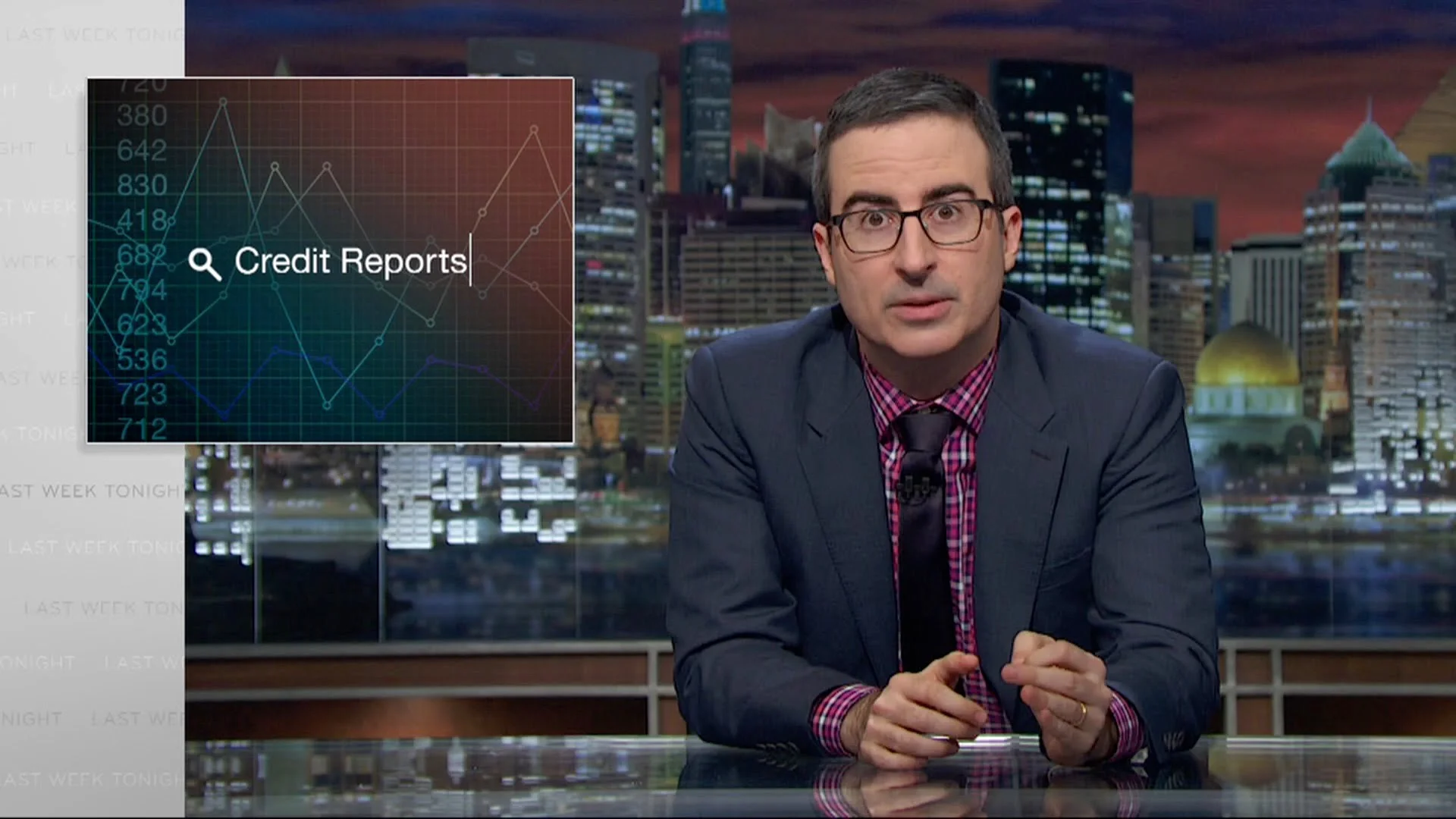
Last Week Tonight with John Oliver: Credit Reports

Last Week Tonight with John Oliver: Credit Reports

John Oliver on the Credit Reporting Industry

Earlier this month, HBO's John Oliver of Last Week Tonight did a segment on credit reports. The segment highlights studies which report major problems in the credit reporting industry. The studies reveal that credit reports contain a shocking number of errors. One study found that 25% of consumers had errors in their credit reports. That means that 1 and 4 credit reports have an error. The study further states that 1 and 20 credit reports contain sufficient errors that would make a consumer pay more for a car loan or a mortgage. Credit report errors vary by type and may be serious enough to deny an application for credit, housing or employment.

How to Dispute Errors on a Credit Report

Step 1: Obtain your free credit reports
Obtaining your credit report is the first step in disputing any inaccurate or wrong information which may appear on it. Federal law requires the three national credit reporting agencies, Equifax, Experian, and Trans Union, to provide you with a free credit report every year. Most likely, each of these credit reporting agencies has a credit file on you. Get all three of your credit reports. 

CRA Reinvestigation Obligations Under the FCRA

When a consumer disputes the completeness or accuracy of any information contained in his/her credit report, the consumer reporting agency (CRA) must conduct a "reinvestigation."  The term "reinvestigation" is a statutory term under the Fair Credit Reporting Act (FCRA). If the reinvestigation reveals that the information is inaccurate or cannot be verified, the CRA must promptly delete the information. 15 U.S.C. § 1681i(a). Failure to conduct a reasonable reinvestigation violates the FCRA. Cushman v. Trans Union Corp., 115 F.3d 220, 223–24 (3d Cir.1997). The burden to conduct the reinvestigation is on the credit reporting agency. It cannot be shifted back to the consumer.

A credit reporting agency's reinvestigation obligation is to verify the accuracy of its original source of information. This duty may include going beyond the original source. Whether the credit reporting agency must go beyond the original source depends on a number of factors, including: (1) whether the consumer has alerted the CRA that the original source may be unreliable; (2) whether the CRA itself knows or should know that the original source is unreliable; and (3) the comparative costs of verifying the accuracy of the original sources versus the potential harm the inaccurate information may cause the consumer. Dixon-Rollins v. Experian Information Solutions, Inc., 753 F.Supp.2d 452 (2010).

Does Your Credit Report Have Errors?

What should you do if you learn that your credit report has errors? You can either contact us about how to proceed or send a dispute to the consumer reporting agency (CRA) on your own. There are several ways to initiate the dispute process with the CRAs, including using the dispute form which you may have received when you ordered your credit report; using the CRAs online dispute form; sending a dispute letter by mail (certified mail is recommended but not required); or by telephone. Whichever method you choose, you should remember to keep an accurate record of your dispute, including a copy of your dispute form or letter. If you use the online dispute form, you should take a screen shot of your dispute before sending it. 

How to Dispute a Credit Report

How to Dispute Credit Report

How to Dispute Credit Report

Obtaining your credit report is the first step in disputing any inaccurate or wrong information which may appear on it. Federal law requires the three national credit reporting companies, Equifax, Experian, and Trans Union, to provide you with a free credit report every year. Get your free credit report at AnnualCreditReport.com; which is the official site to help consumers obtain their free credit report. Inaccuracies on your credit report may negatively affect you. If you find wrong information on your credit report start here:

Contact the credit reporting company in question. The disputing procedure can be initiated online.

  • To dispute a credit report from Experian,click here.

  • To dispute a credit report from Trans Union, click here.

  • To dispute a credit report from Equifax, click here.

Credit reporting companies must investigate disputes made by consumers. Thirty (30) days after the dispute is initiated, credit reporting companies are required to provide consumers with the results. The results should be accompanied by a free credit report. If the disputed information has not been corrected following the credit reporting companies dispute procedures, consider seeking legal action.