
collections

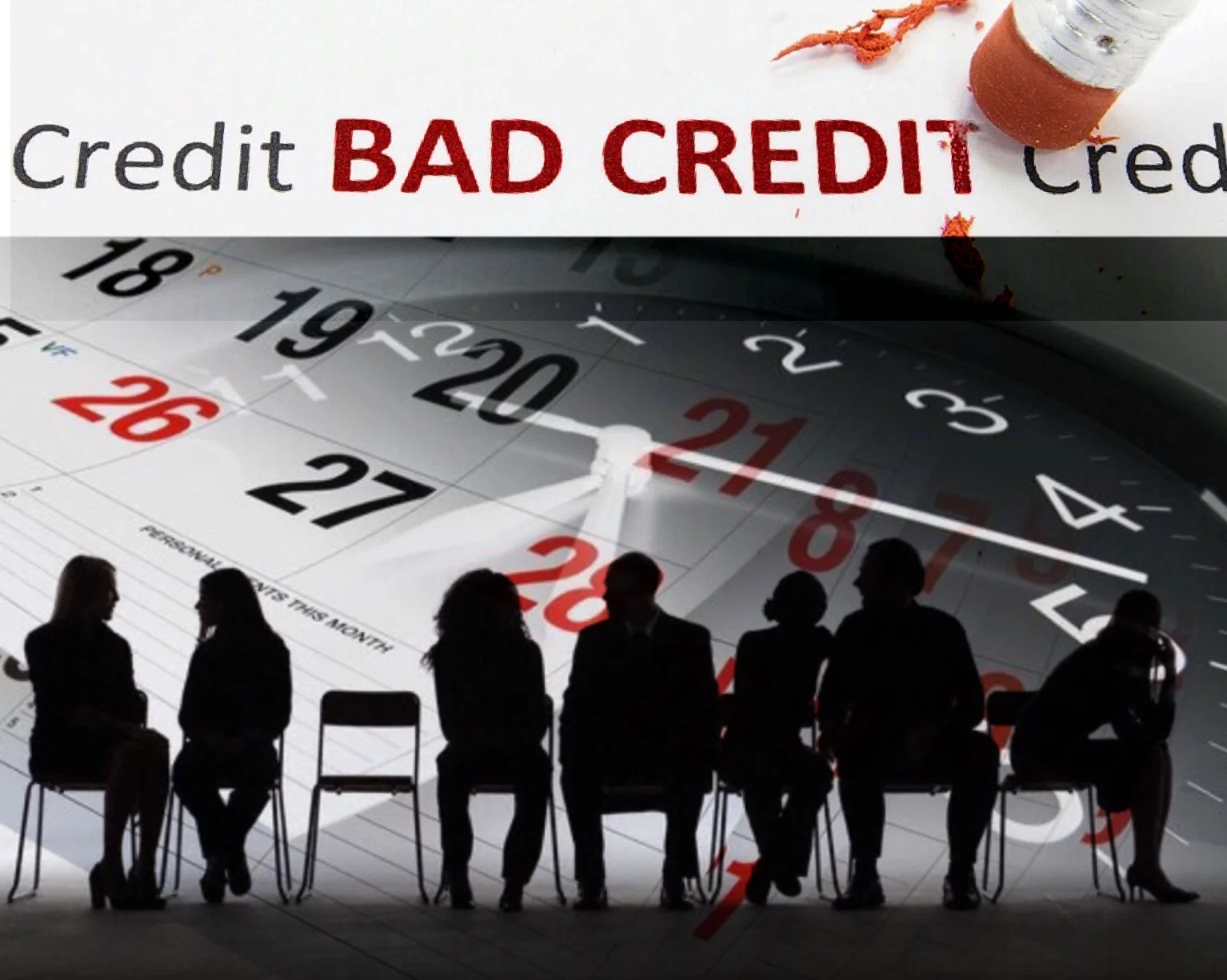
How Long Negative Info Stays on Credit Report

Most negative items fall off a credit report after about seven years, but some bankruptcies can last up to ten years and certain older public records (like tax liens) can follow different rules depending on when and how they were reported. Understanding those timelines helps you know when a black mark should disappear and when to dispute something that is hanging around too long.​

Big picture: the “7‑year rule”

In the U.S., the Fair Credit Reporting Act (FCRA) caps how long most negative information can be reported, which is usually seven years from the event that made the account go bad. The clock normally starts at the date of first delinquency—the first missed payment that leads to the account never being brought current again, not each later collection or sale.​

  • Most negative accounts and late payments: up to 7 years from the first serious delinquency date.​

  • Some public records and bankruptcies: up to 10 years, depending on the type.​

A key point for readers: the timeline is about reporting, not whether the debt is legally collectible, which is governed by separate statute‑of‑limitations laws.​

Late payments: 7 years from first serious miss

Late payments are usually listed as 30, 60, 90, 120 days late and so on, all tied to the same account. If you never catch up and the account stays delinquent until it is charged off or closed, all of those related late marks must be removed seven years after the original delinquency that started the chain.​

  • If you fall behind but then bring the account current and keep it current, the late mark still can stay up to 7 years from the month it happened.​

  • If you never bring it current, the entire negative account history tied to that first missed payment must drop off by the 7‑year point.​

When readers see lates older than seven years from that first miss, they can treat them as “obsolete” and dispute them as outdated.​

Collections and charge‑offs: 7 years plus up to 180 days

Collections and charge‑offs often confuse people because the account may move between collectors or show multiple entries, but the reporting clock does not restart each time it is sold. For most debts, the maximum reporting period is about 7 years from the date of first delinquency, with the law allowing up to an extra 180 days to account for the time a lender typically waits before charging off or sending it to collections.​

  • A collection or charge‑off may appear for up to 7 years plus 180 days from when you first fell behind on the original account, not from when the collection agency got it.​

  • If the original account must be removed because the 7‑year window has passed, any related collection entries tied to that same debt should also be removed.​

Blog readers should note that paying a collection does not restart the federal reporting clock, even though it may change how the item is labeled (for example, “paid collection”).​

Bankruptcies: 7 to 10 years

Bankruptcy is one of the longest‑lasting marks on a credit report, and its timeline depends on the chapter filed. The bankruptcy case itself is a public record entry, and then each account included in the bankruptcy is also reported with its own aging clock.​

  • Chapter 7 bankruptcy can be reported for up to 10 years from the filing date under federal rules.​

  • Chapter 13 bankruptcy may also be reportable for up to 10 years, but many major bureaus choose to remove completed Chapter 13 cases after about 7 years as a business policy.​

The individual debts discharged in bankruptcy typically must be removed within about 7–7½ years from the bankruptcy filing date or from the original delinquency, whichever applies, so readers should watch for accounts that linger beyond that window.​

Tax liens and other public records

Public records on credit reports have changed over the past several years, with many consumer credit files no longer showing most civil judgments or many types of tax liens, but older entries can still appear on some reports or specialty background checks. When they do show, their timelines are often similar to or somewhat longer than the standard 7‑year rule.​

  • Historically, many civil judgments and tax liens could appear for 7 years or more, depending on state law and whether the obligation remained unpaid.​

  • Even where reporting is allowed, bureaus often choose to purge older public records to reduce errors and comply with evolving standards, so recent reports may show fewer liens than in the past.​

For a blog, it helps to emphasize that anyone seeing very old public‑record negatives—especially beyond 7–10 years—should verify whether those items are still permitted and dispute if they are outdated or inaccurate.​

When an item should drop off – and what to do if it doesn’t

A practical way to teach readers is to anchor everything to the “starting event” and then apply the standard window. If an item is still showing after that, it is a strong candidate for a dispute.​

  • Identify the date of first delinquency or filing (for late payments, collections, charge‑offs, and bankruptcies) and count forward 7–10 years, depending on the item.​

  • If the negative mark remains after that window, file a written dispute with each bureau that is still reporting it, and include dates and any documents; bureaus generally must investigate and respond within about 30 days.​

A closing reassurance for readers: the impact of negative items usually fades long before they vanish completely, and combining disputes of outdated errors with consistent positive habits—on‑time payments and lower balances—can rebuild a healthier profile even while some older marks are still aging off.​

Changes in Medical Debt Reporting

The nation’s largest credit reporting agencies; Equifax, Experian, and TransUnion announced on Friday that many U.S. consumers will have their medical debt wiped from their credit reports. 

In a joint statement, they stated that nearly 70% of medical collection debt accounts from consumer credit reports would be removed after conducting months of market research. The changes will take effect July 1, 2022.

Paid medical debt will no longer be included on consumer credit reports. Credit bureaus plan to extend the timeline reporting how long a medical bill is sent to collections. Typically a medical bill is sent to collections after 180 days. Consumers will now be given up to one full year. This will give consumers more time to work with insurance and/or medical providers to address their debt before it is reported to their file without it impacting their credit score.

 Most medical debts in collection on consumer credit reports are under $500. Beginning in the first half of 2023 Experian, Equifax, and TransUnion will no longer include unpaid medical collection debt that is under $500, though that threshold may increase. 

This does not change the responsibility of the consumer to pay, but it may alleviate some of struggle consumers face when trying to apply for credit. 

$88 Billion in Medical Bills on Credit Reports According to CFPB

$88 Billion in Medical Bills on Credit Reports According to CFPB

$88 Billion in Medical Bills on Credit Reports According to CFPB

Navient's Deceptive Practices

Navient is one of the most well know student loan services in the United States. Millions of borrowers use this company to repay their federal and private student loans. They have lawsuits that allege harmful and deceptive practices that could impact your student loans. 

Below we will go deeper into Navient lawsuits that have began since 2017. 


Borrowers Being Mislead

The Consumer Financial Protection Bureau (CFPB) stated that Navient “illegally failed borrowers at every stage of repayment.” The CFBP alleged in a lawsuit that Navient damaged borrowers by providing negative and sometimes false information such as: not processing payments correctly and not taking the appropriate steps to rectify situations when borrowers submitted complaints to company.


The lawsuit had alleged that Navient purposely caused many borrowers to pay more on their loans than they were expected to. The CFBP is suing Navient for borrowers to get financial relief from their mishandling. 


The suit alleged that Navient directed borrowers into forbearance over other preferred options such as income-driven repayment plans. A forbearance temporarily pauses student loan payments without hurting the borrowers repayment standing, but the interest builds up while the borrower is not making payments. This means that borrowers end up paying more in interest rather than being able to save money while choosing the IDR plan. 


Navient Advises Pricey Options 

A lawsuit filed in October 2020 in New Jersey alleges that Navient pressured borrowers into taking out private student loans with co-signers, even though it wasn’t in the best interest of the borrower. New Jersey states that Navient told borrowers they could have family members guarantee their private loans as co-signers, but set in place almost impossible hurdles to let borrowers release their co-signers from the loan. This makes it so that Navient gets paid if the borrower defaults on the loan since Navient is able to collect by charging the co-signer on the loan. 


Lies and Collections

New Jersey states that Navient would tell borrowers that they owed more on the loan than they really did if they were behind on their loans. Navient did this by collecting the amount that was past due and also the next months amount. This has caused borrowers to overpay hundreds of dollars oftentimes when they could not afford it. The CFPB alleged that Navient would not allow some borrowers to discharge their loans even though they qualified. The CFPB stated that “severely and permanently disabled borrowers with federal student loans, including veterans whose disability is connected to their military service, have a right to seek loan forgiveness under the federal Total and Permanent Disability discharge program—Navient misreported to the credit reporting companies that borrowers who had their loans discharged under this program had defaulted on their loans when they had not.” 


How This Affects Your Student Loans 

Many lawsuits are still on-going, so as of right now you won’t see an impact. If you are experiencing any issues with your student loan servicer, you can take these steps to ensure that it is working in your best interest: 


  • Review all of the details in your loan. Whether you have been on autopay or have not been able to make payments in awhile, you might not know what is happening with your loans or even the types of loans you have. Since Navient services private and federal loan lenders, you should check what you have before exploring your options.

  • Look for alternatives on your own. You can explore different repayment options such as: income-driven repayment plans, forgiveness, or student loan refinancing. It is vital to know what options you have before speaking to your loan servicer so that you are informed about different offers.

  • Ask the servicer for options. After researching on your own, contacting your servicer is next. Ask them what you qualify for and how each option will impact your repayment and what you will eventually repay over the lifetime of your loan. If the lender mentions that you do not qualify for specific programs or if they direct you to more expensive programs and payment options — it may be a red flag.

  • File a complaint if necessary. If you believe that your loan servicer is causing you to pay more money than you think you owe or you’re being mislead, consider filing a formal complain. You can do this directly with your lender, your states attorney general or at the federal lever with the U.S. Department of Education, Federal Trade Commission, or the CFPB. If you do this, you will need documentation proving your case. Keep a detailed record of notes, every phone calls, and correspondence with your lender.


Does Navient Service Your Loan? 

Navient services millions of borrowers but it does not service ever borrower. You can check your servicer with the Department of Education if you have federal loans. The best way to find out who services your private loans is to check your latest correspondence. If you have not made payments in awhile, you should check your credit report. You can do this for free through www.AnnualCreditReport.com. Due to the pandemic you can check your reports weekly for free until April 2022. This will allow you to see all of your debt, including delinquencies, in default, and paid off loans. 


Will Navient Forgive Student Loan Payments? 

A lawsuit against Navient that was settled July 2020 gave no monetary damages to the borrowers affected. Instead, Navient implemented improved training for employees regarding PSLF. It is a possibility that future lawsuits could proved the affected borrowers a monetary compensation, but it is unlikely that Navient will forgive student loan payments. 


Many lawsuits are still ongoing. If you feel that you have been negatively and wrongfully affected by Navient, consider reaching out for help and guidance. 

How long does information stay on your credit report?

How long does information stay on your credit report?

According to federal law, credit reporting agencies may report negative information on your credit report for a specific amount of time. The amount of time depends on the type of discrepancy. The times are as follows:

  • Bankruptcies can be reported for ten (10) years.
  • Civil suits, judgments, and records of arrest can be reported for seven (7) years.
  • Paid tax liens can be reported for seven (7) years from the date of payment.
  • Accounts placed in collections can be reported for seven (7) years.